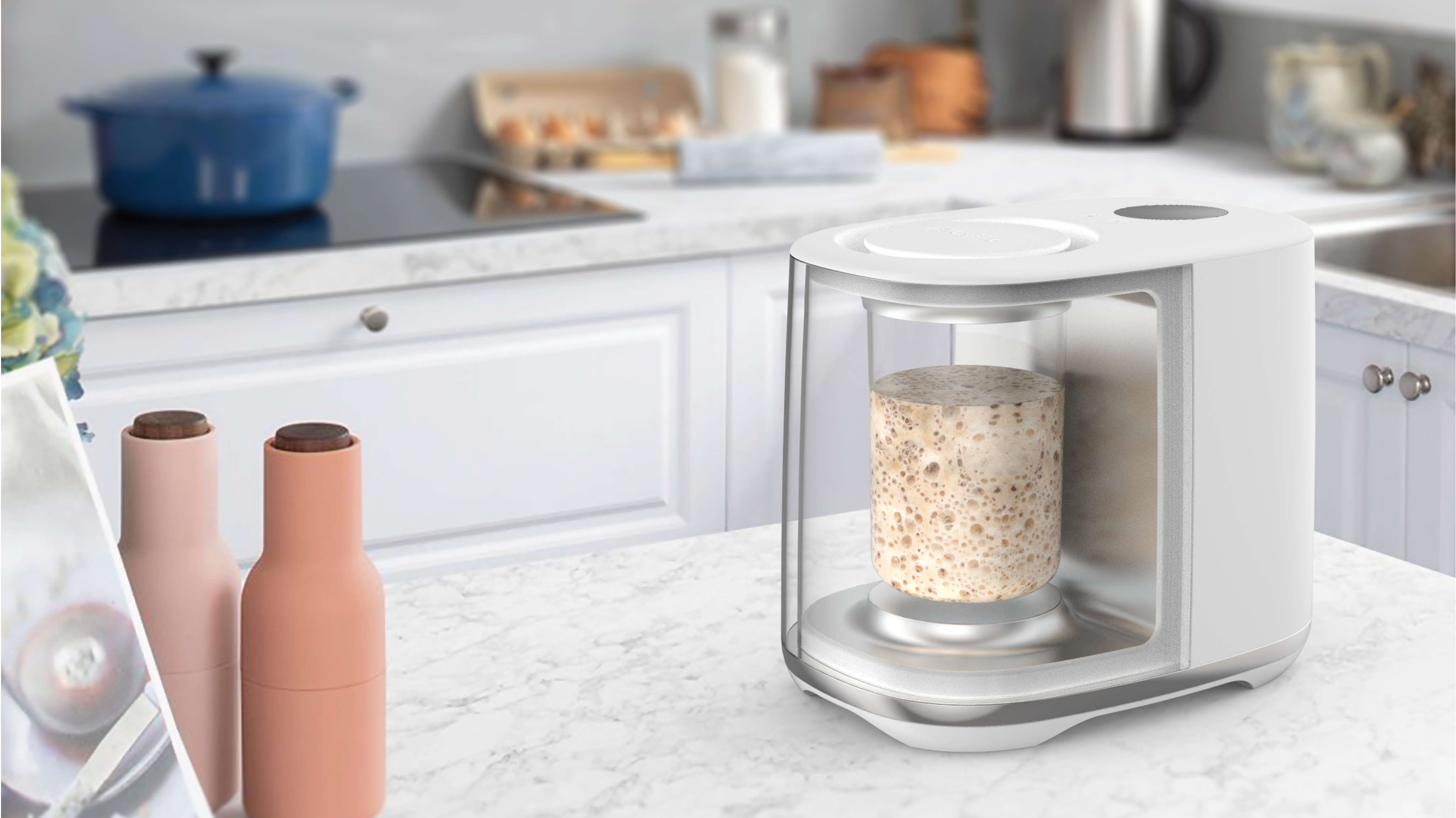
Startergotchi
A sourdough starter incubator which tells you when your starter is ready to use.

A sourdough starter incubator which tells you when your starter is ready to use.
Baking sourdough and maintaining a starter is not like baking your everyday sandwich loaf in a bread maker. The process is tricky with multiple points along the way where your dough can fail and turn into a sloppy, sticky pancake.
So how might we address the issues of maintaining a starter to help put customers on the path of sourdough success?
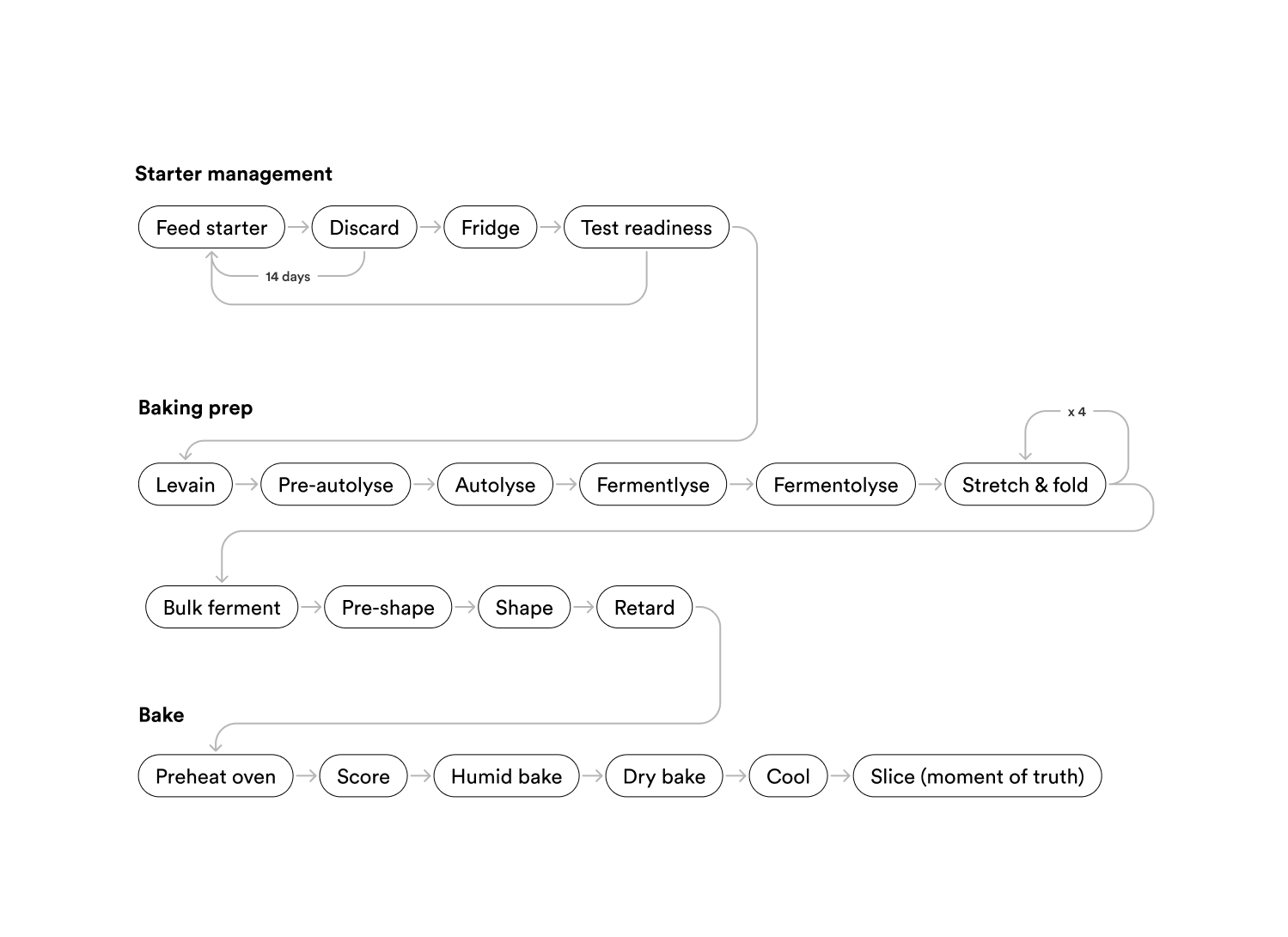
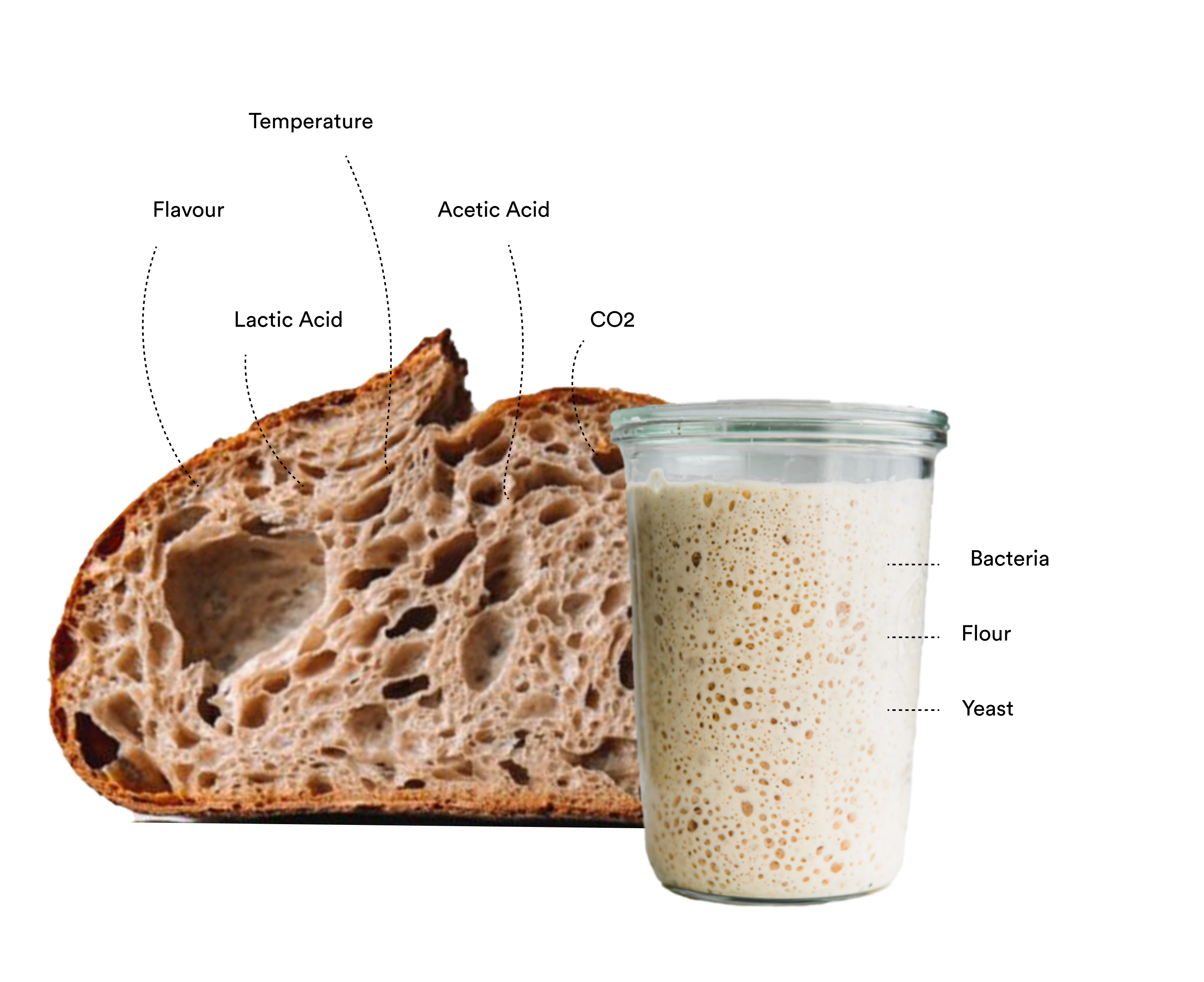
It requires input from bakers, food science experts, designers and engineers to find the answer to this question.
We needed to be able to understand the microbial climate of a sourdough starter and what it needs to survive and grow.
Whilst translating this science into a user-friendly product so the everyday at-home bakers can get a delicious loaf of sourdough, risk free.
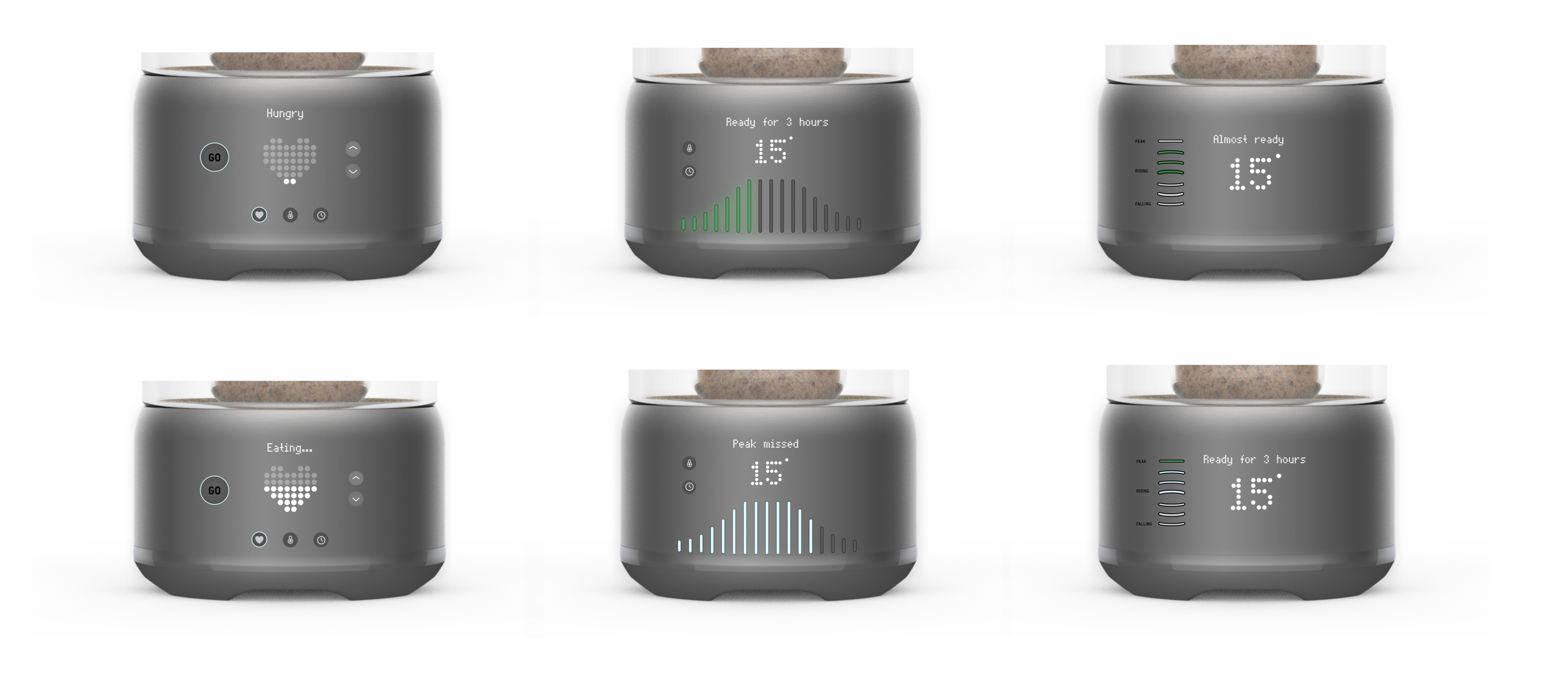
The height sensor display clearly indicates when your sourdough starter is ready to use, by indicating healthy and peak growth levels.
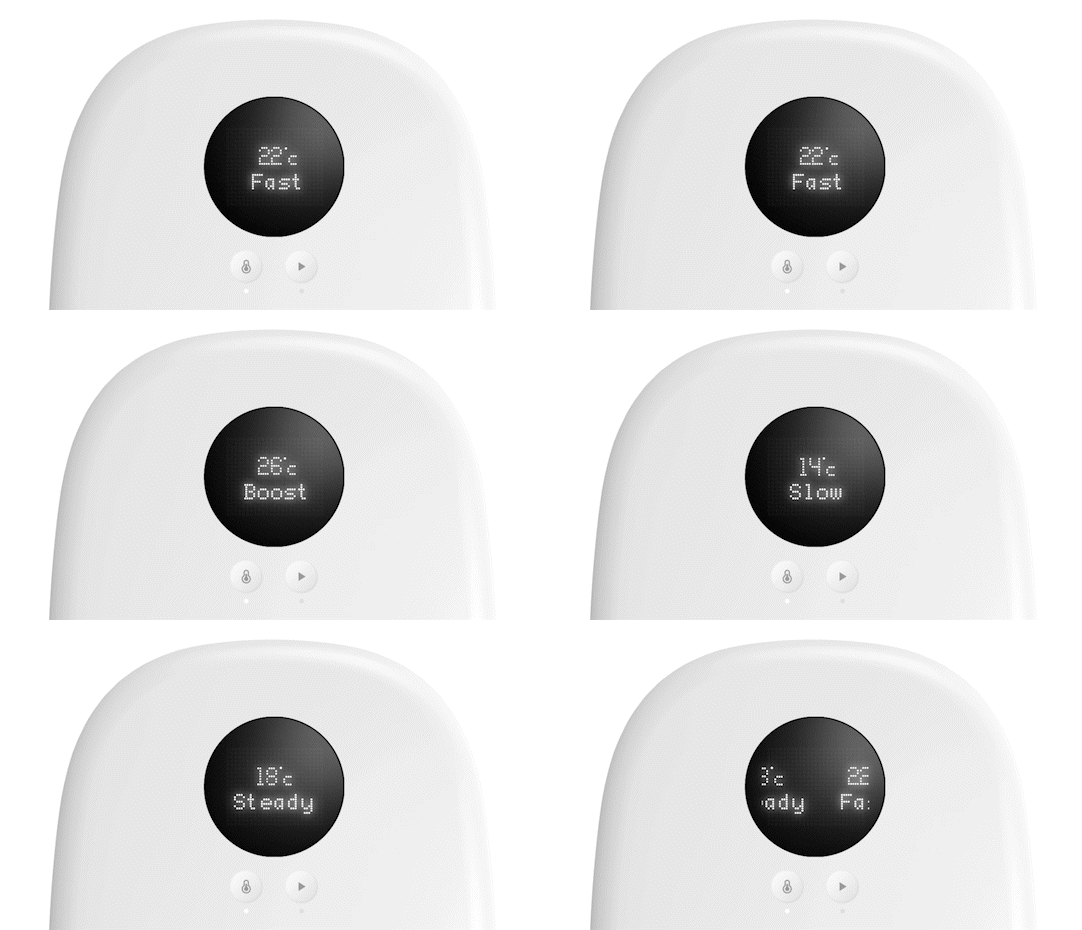
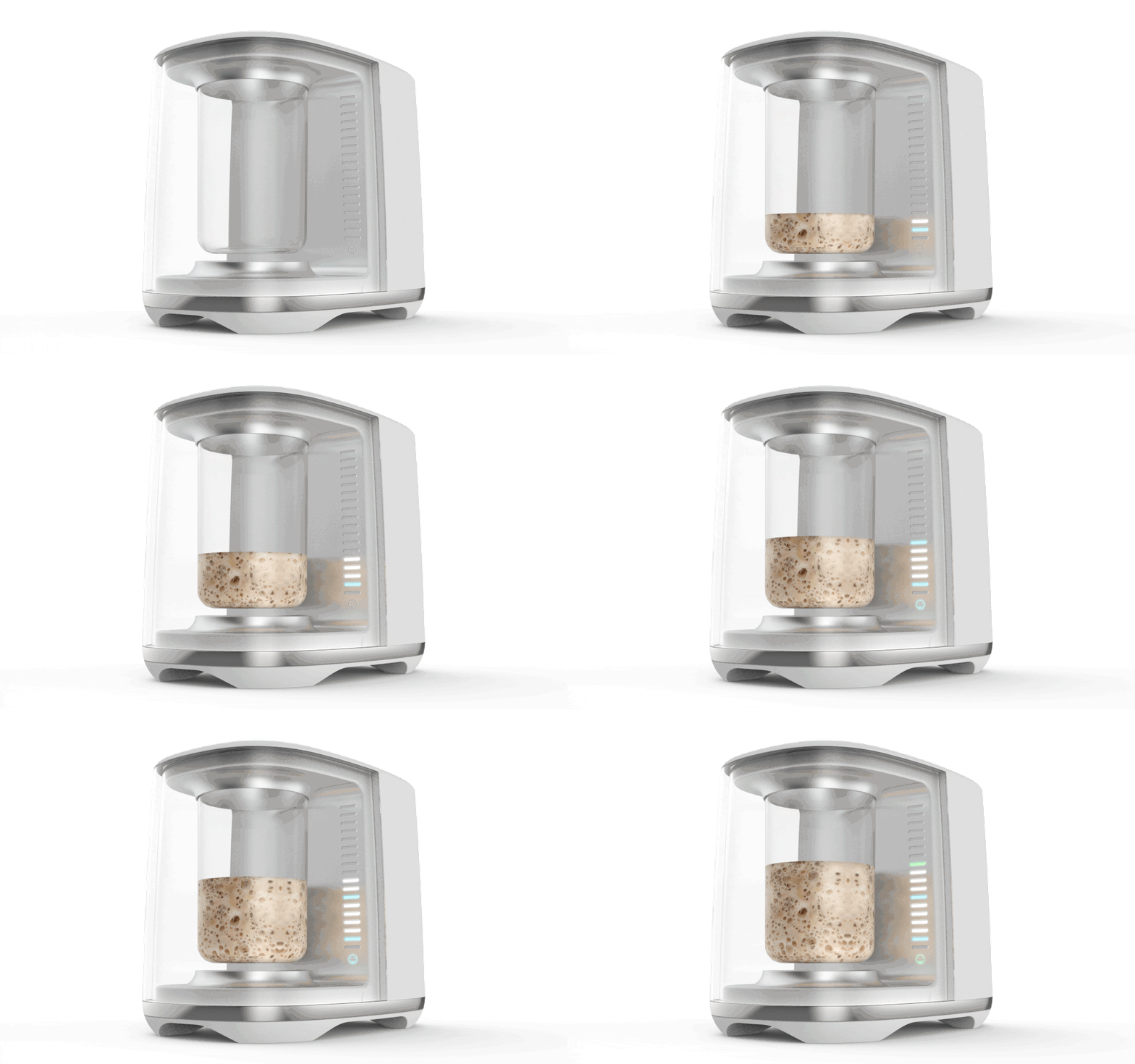
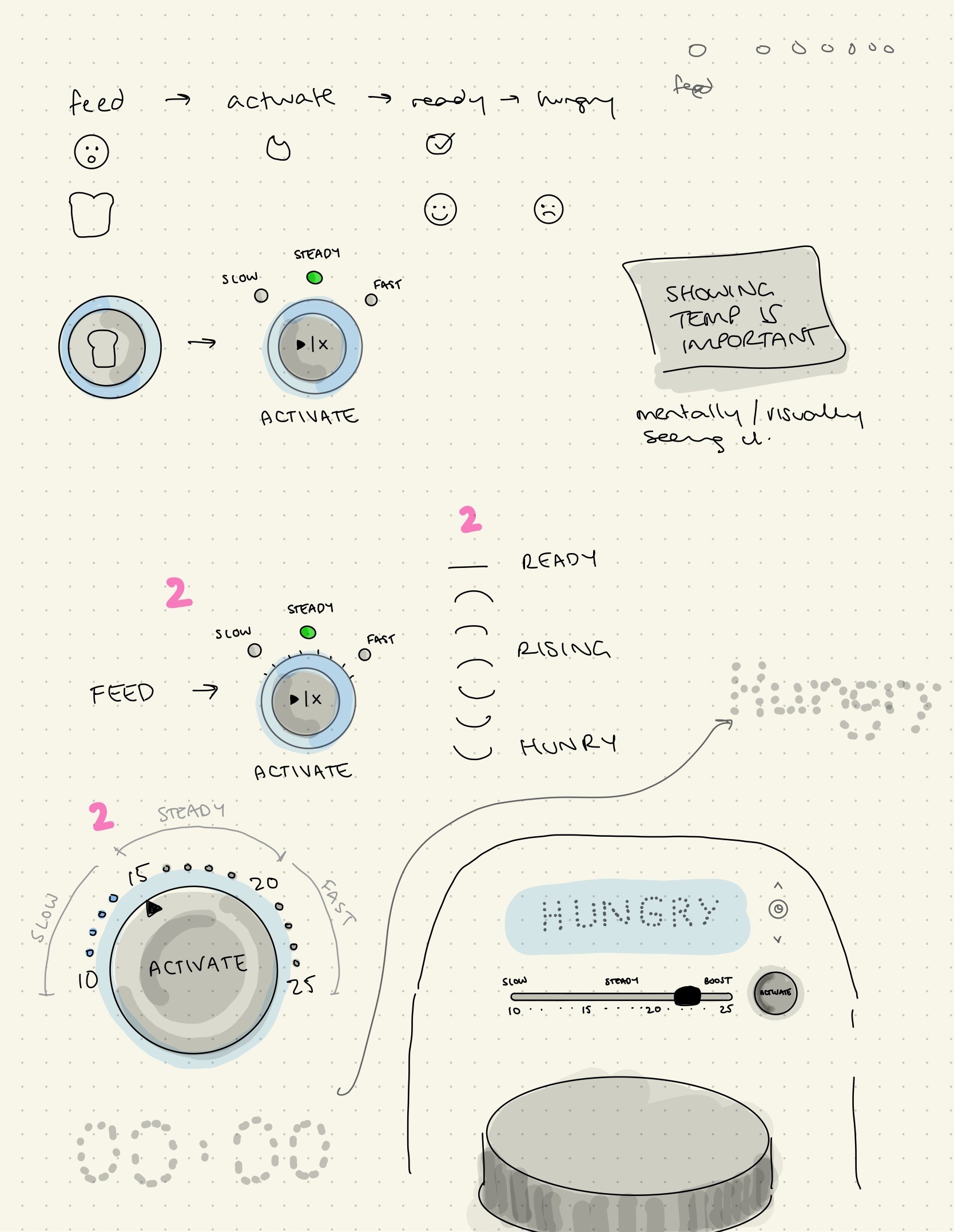
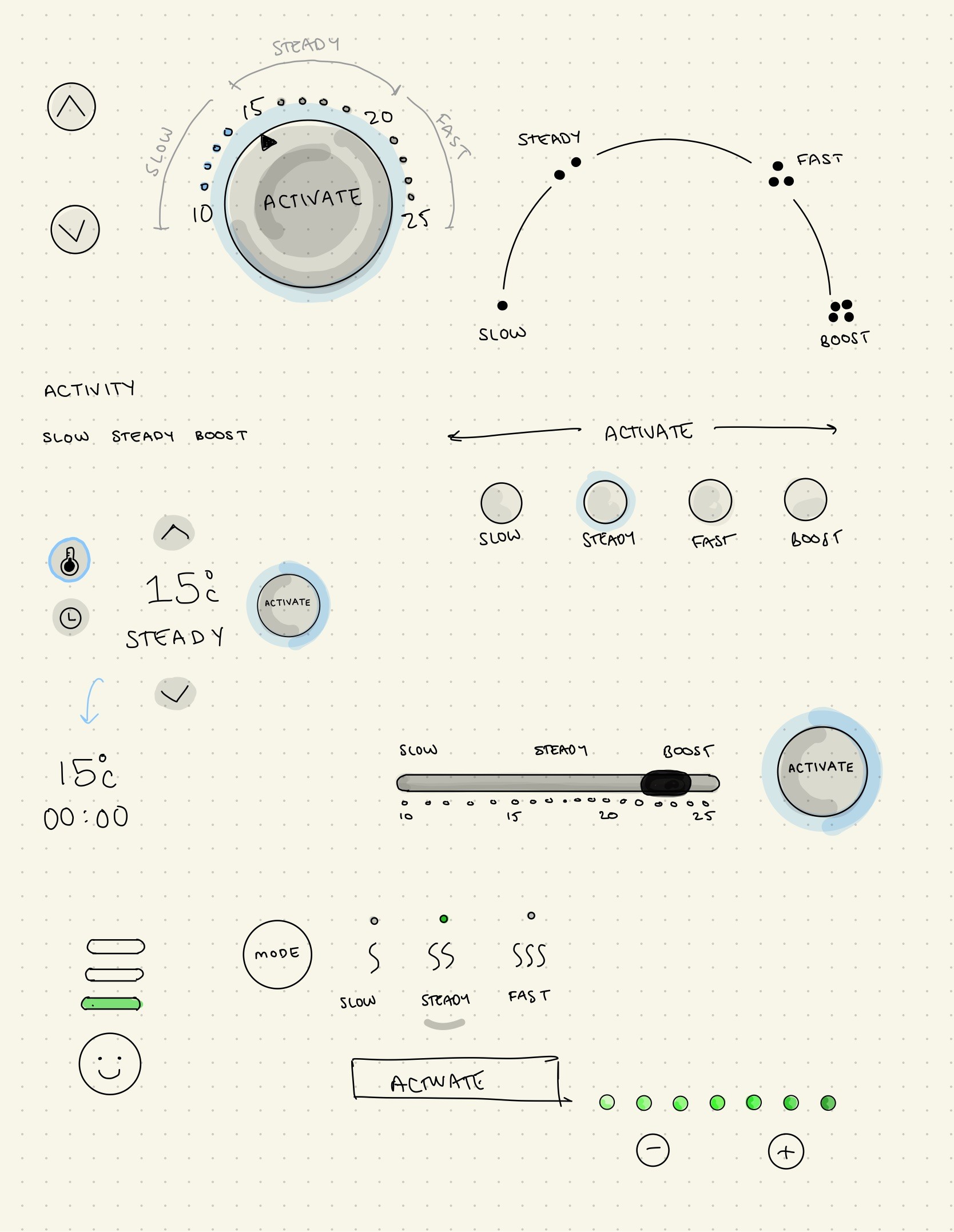
Adjust the cavity temperature to slow down or speed up your starter with presets.
This allows for better scheduling. Your plans no longer revolve around your starter and the ambient temperature, Your starter now adjusts to your plans.
More reliable and consistent food result, regardless of the weather or season.
The emotive interface utilizing a dot matrix display engages users and adds an element of fun to the interaction.
Working
First, we needed to talk to at-home bakers to understand the difficulties they face when making sourdough, and how we can deliver on their needs to help them get the best result possible result.
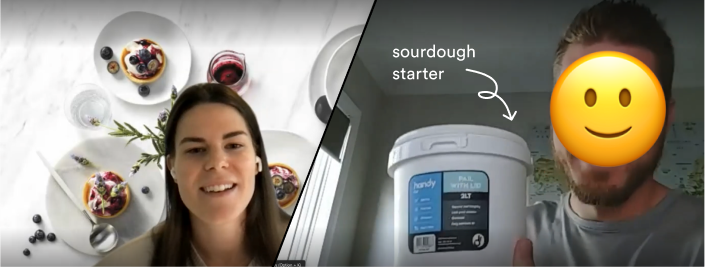
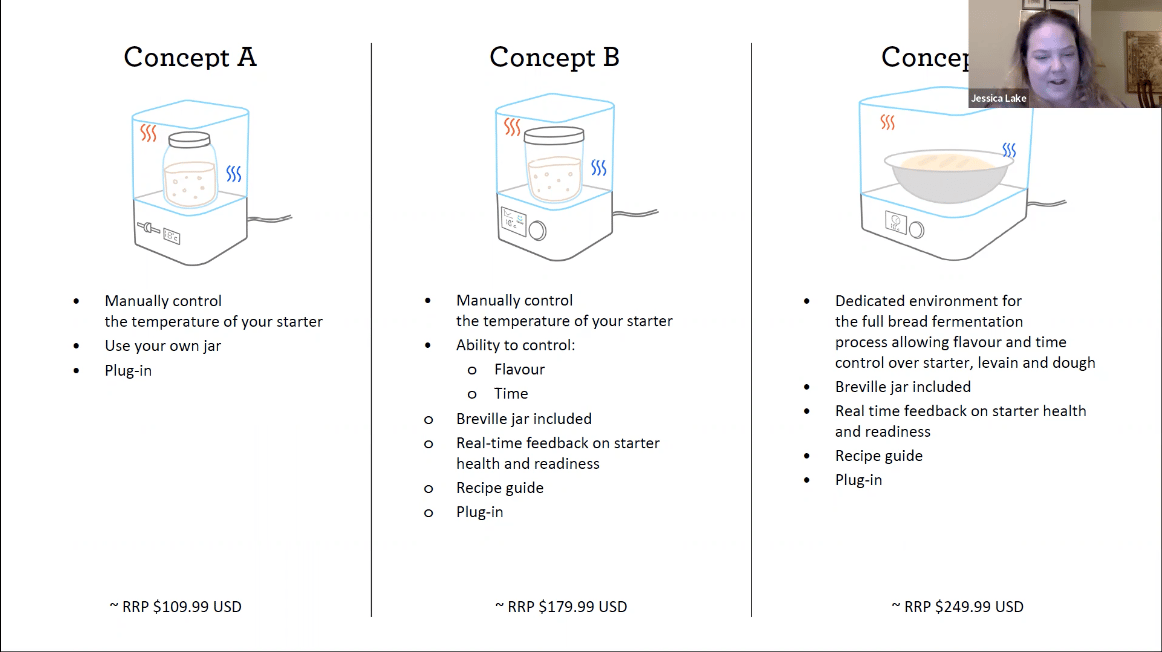
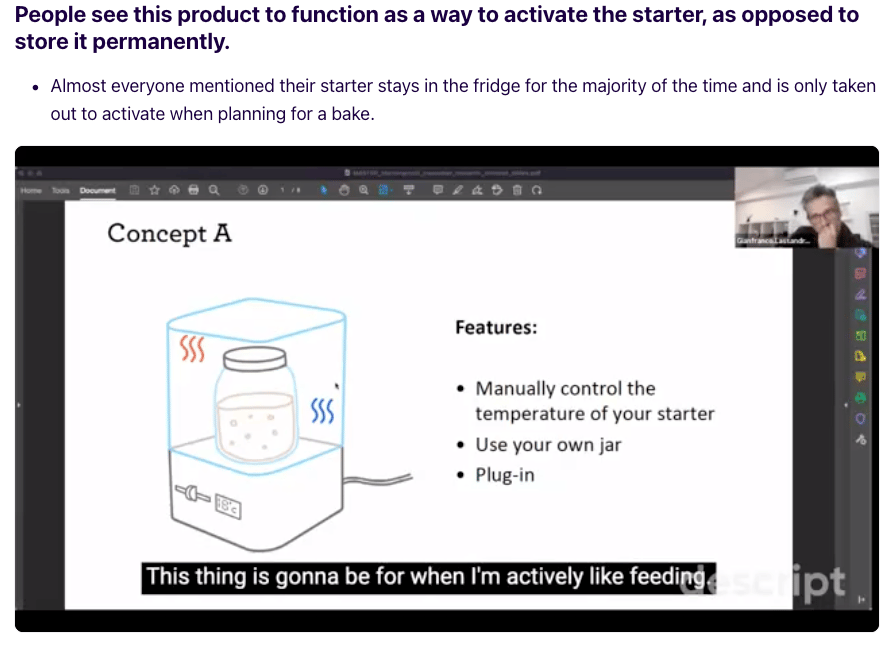
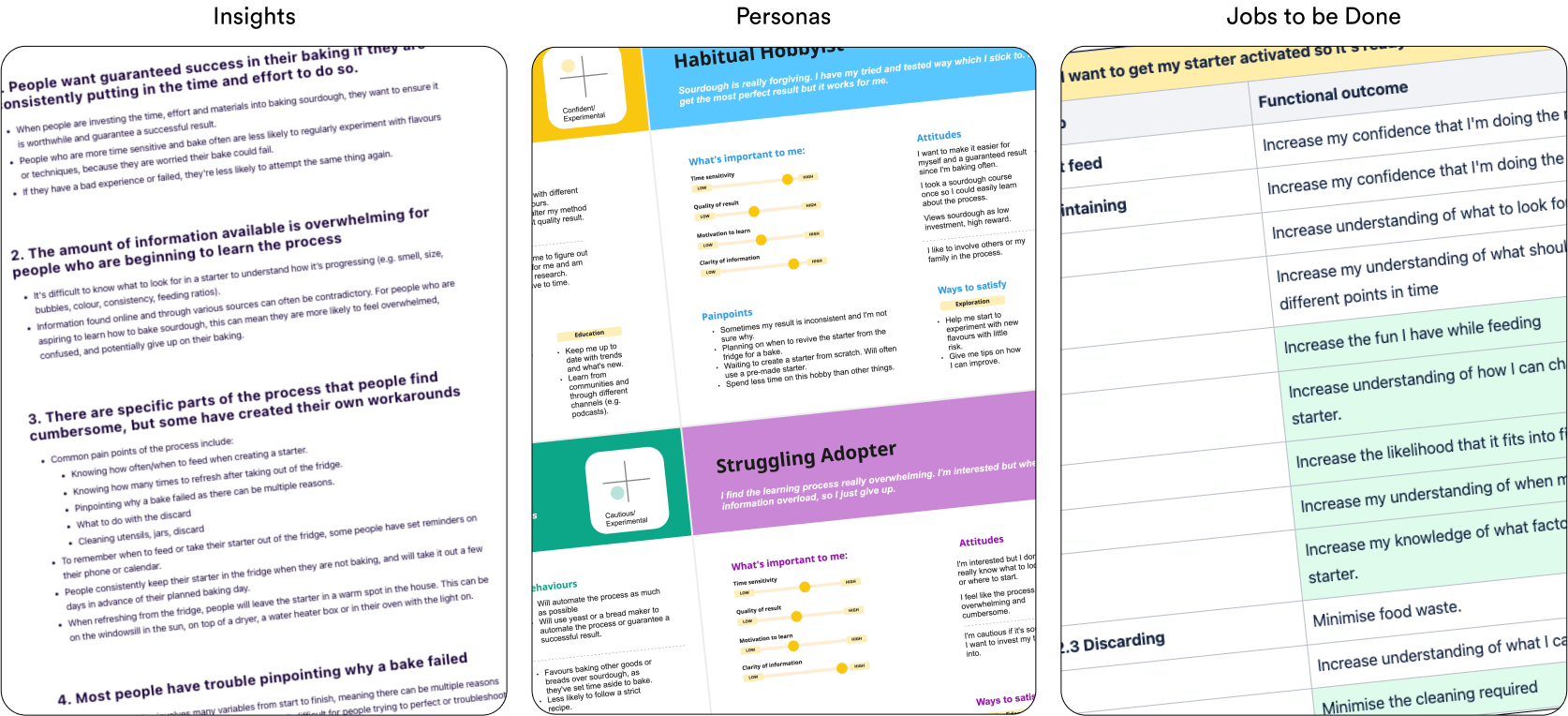
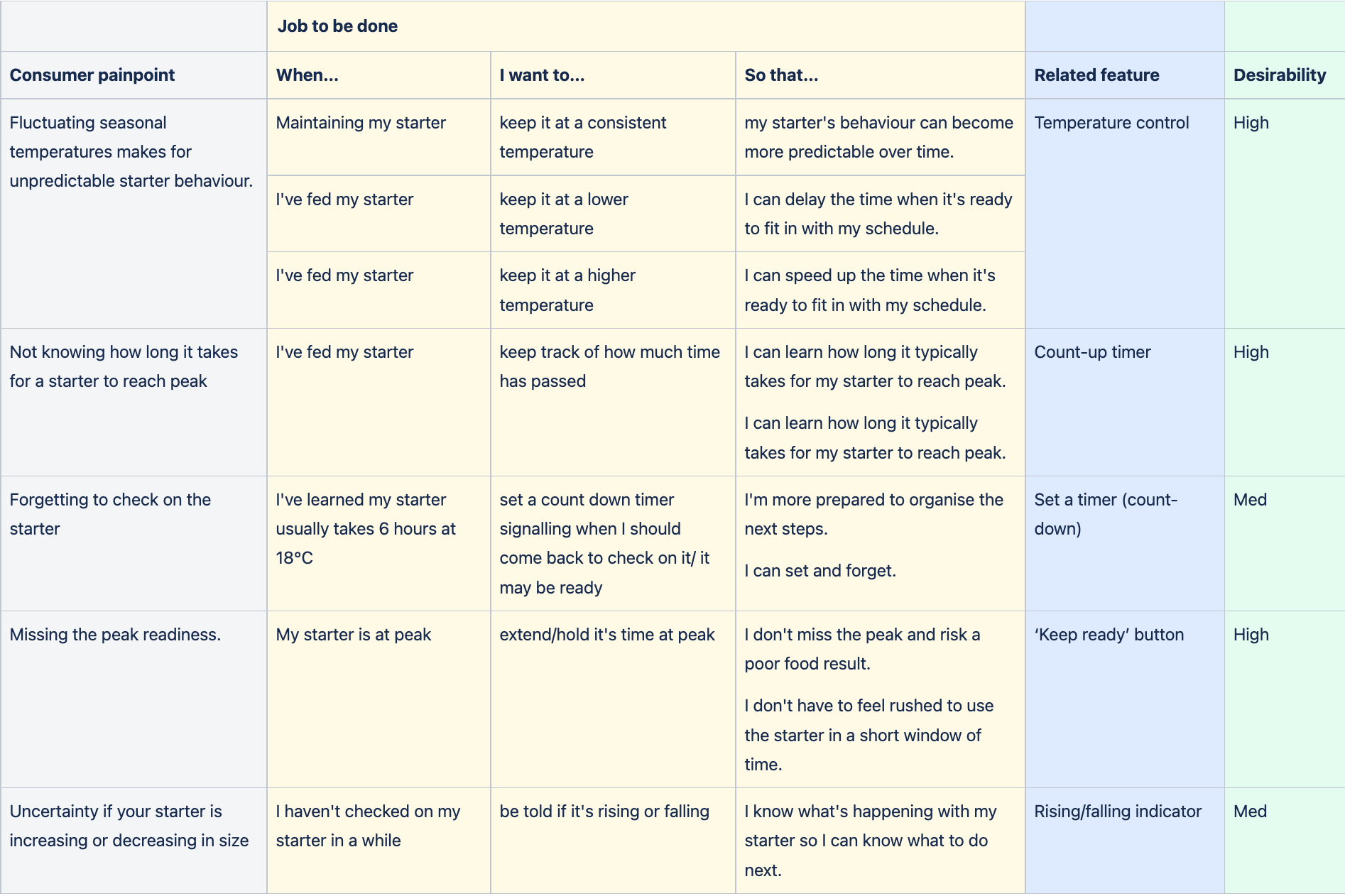
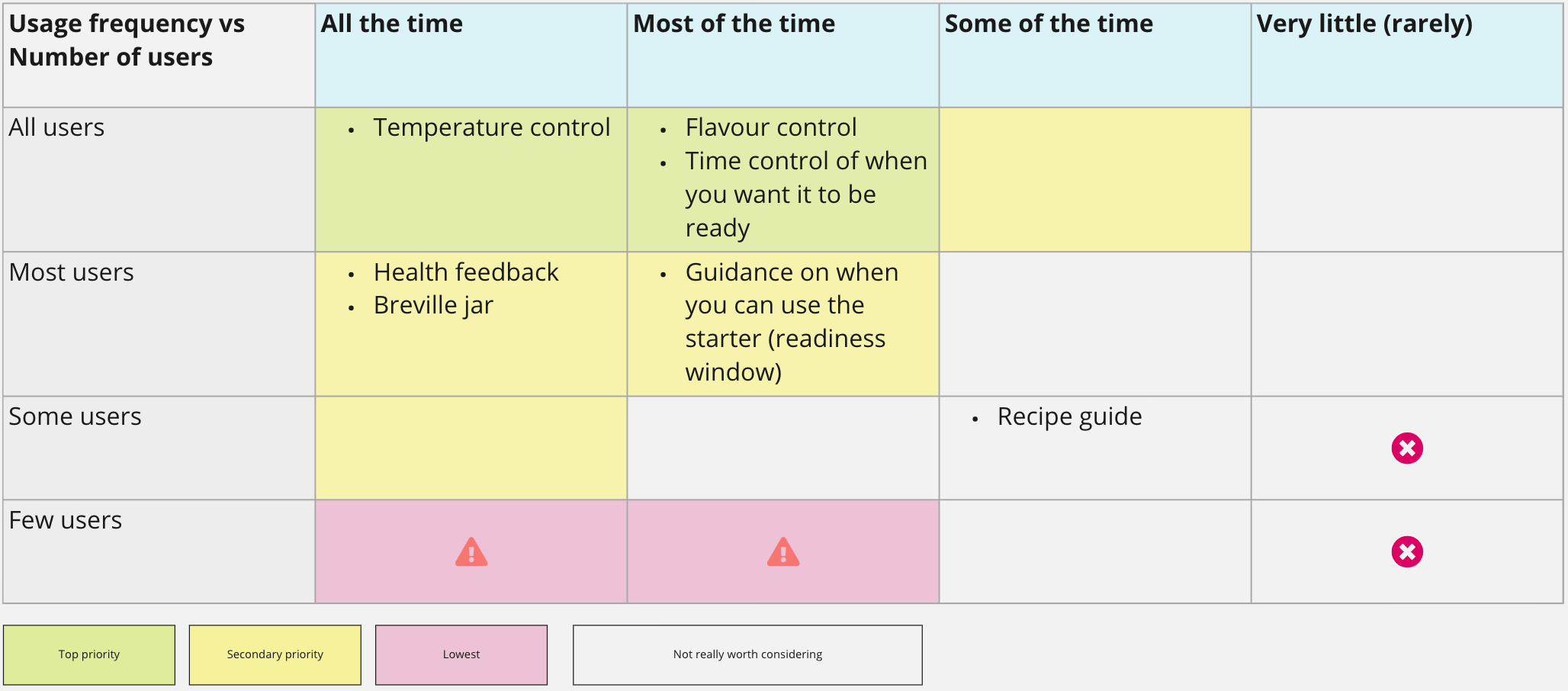
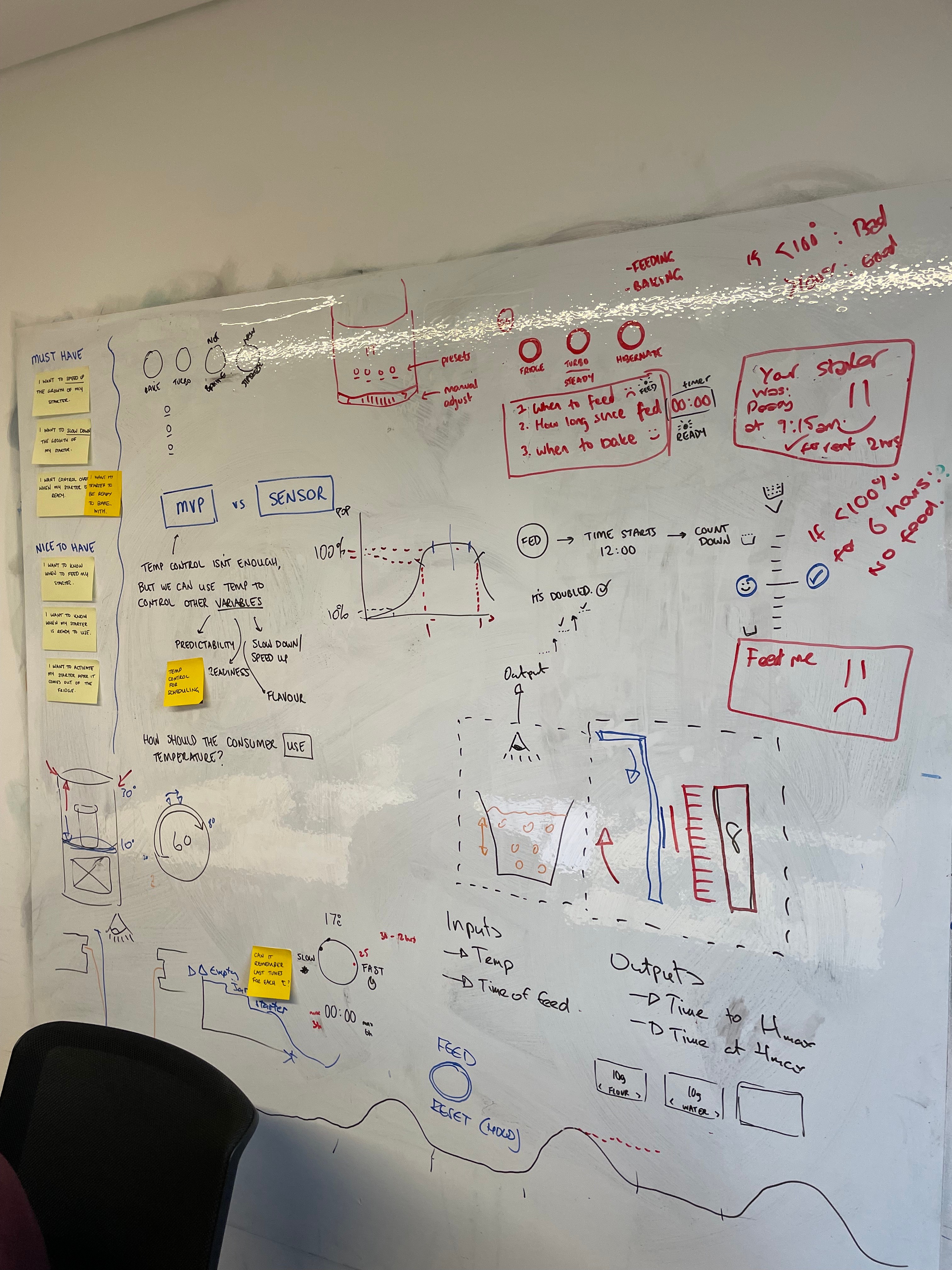
Our research was translated into a core set of jobs the product needed to perform for the user to guarantee success.
This is where collaboration was key.
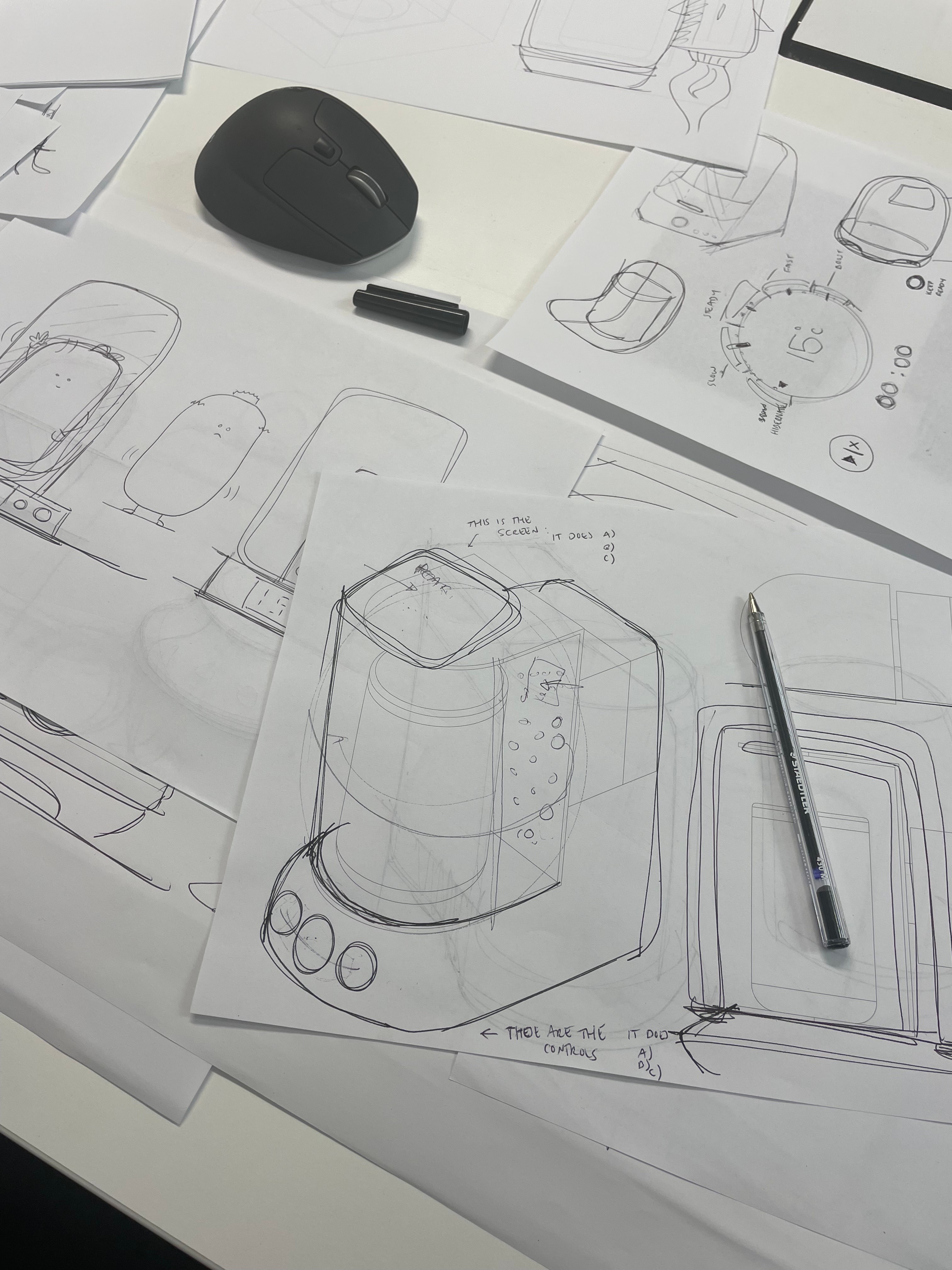
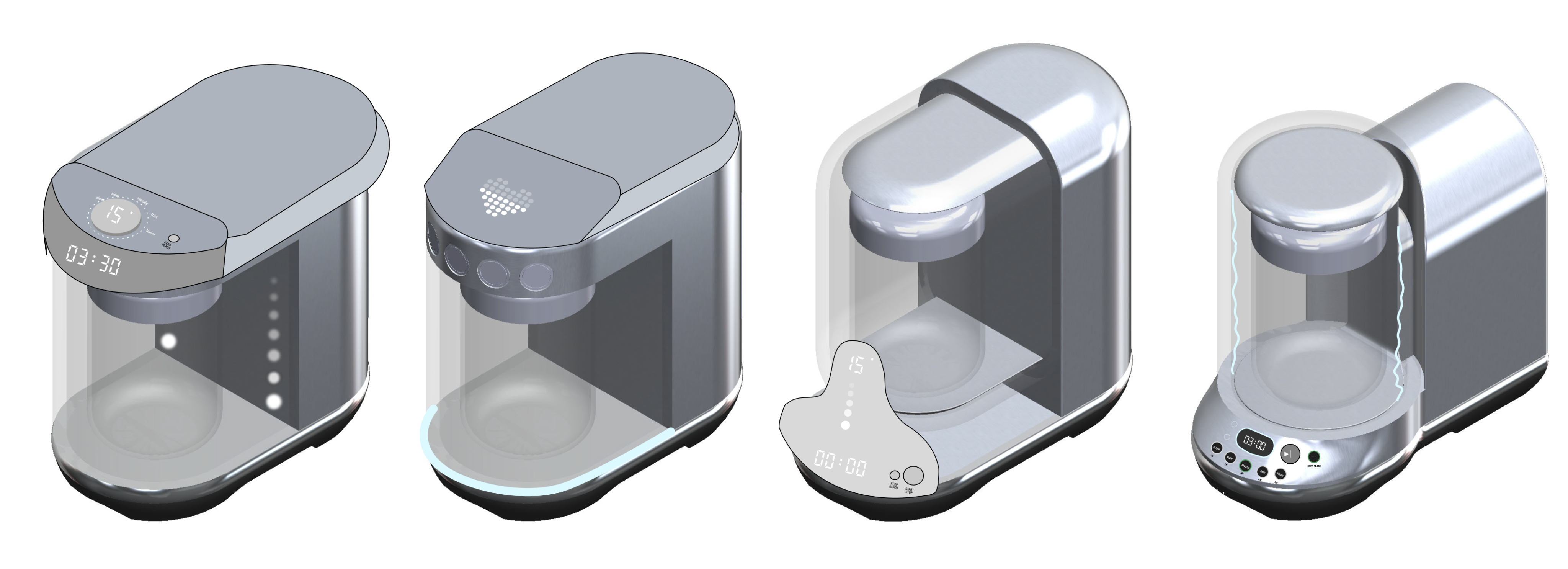
Form (industrial design), interaction (UX), and performance (engineering) all need to work together to ensure we are making the best possible product.
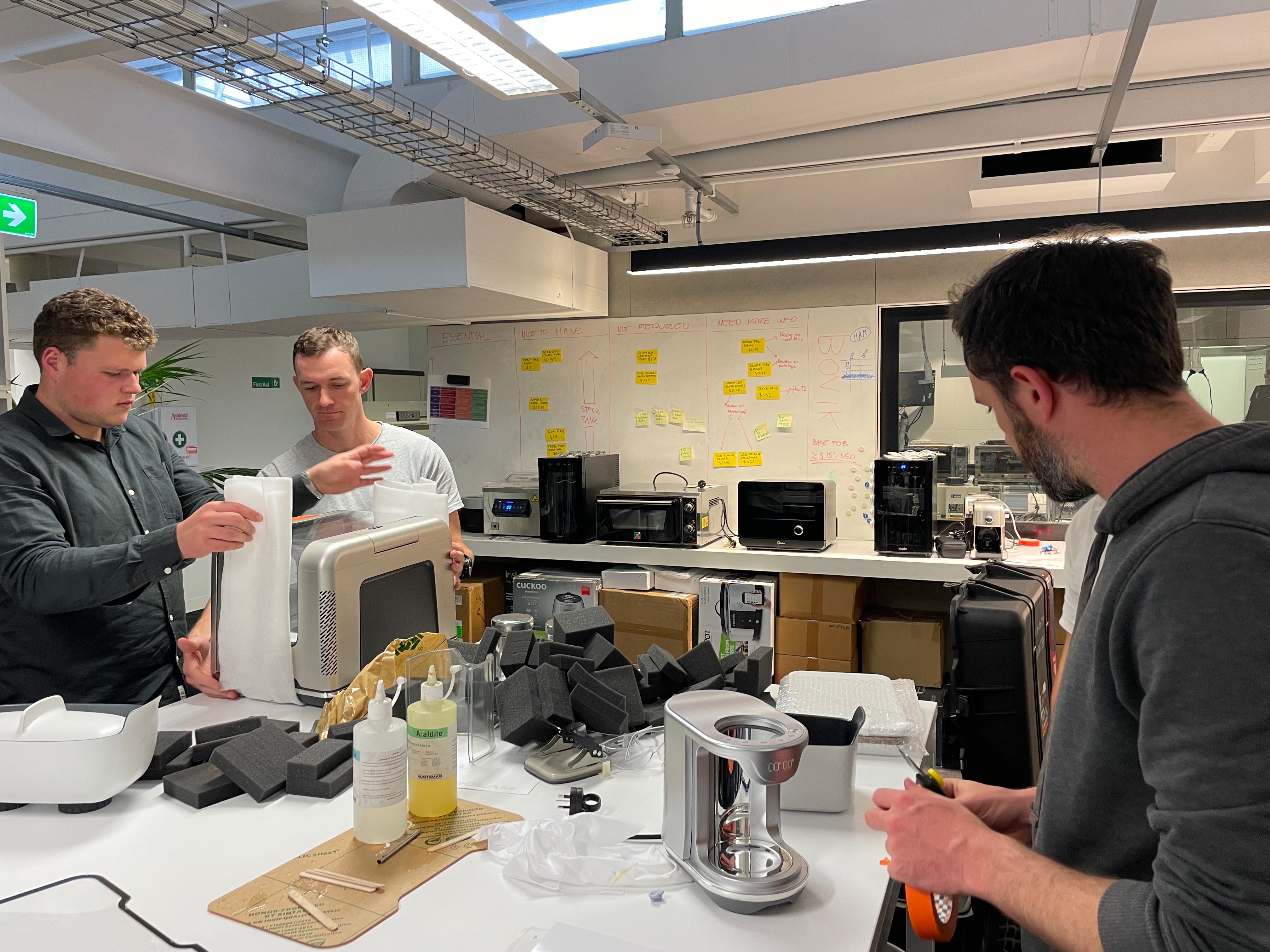
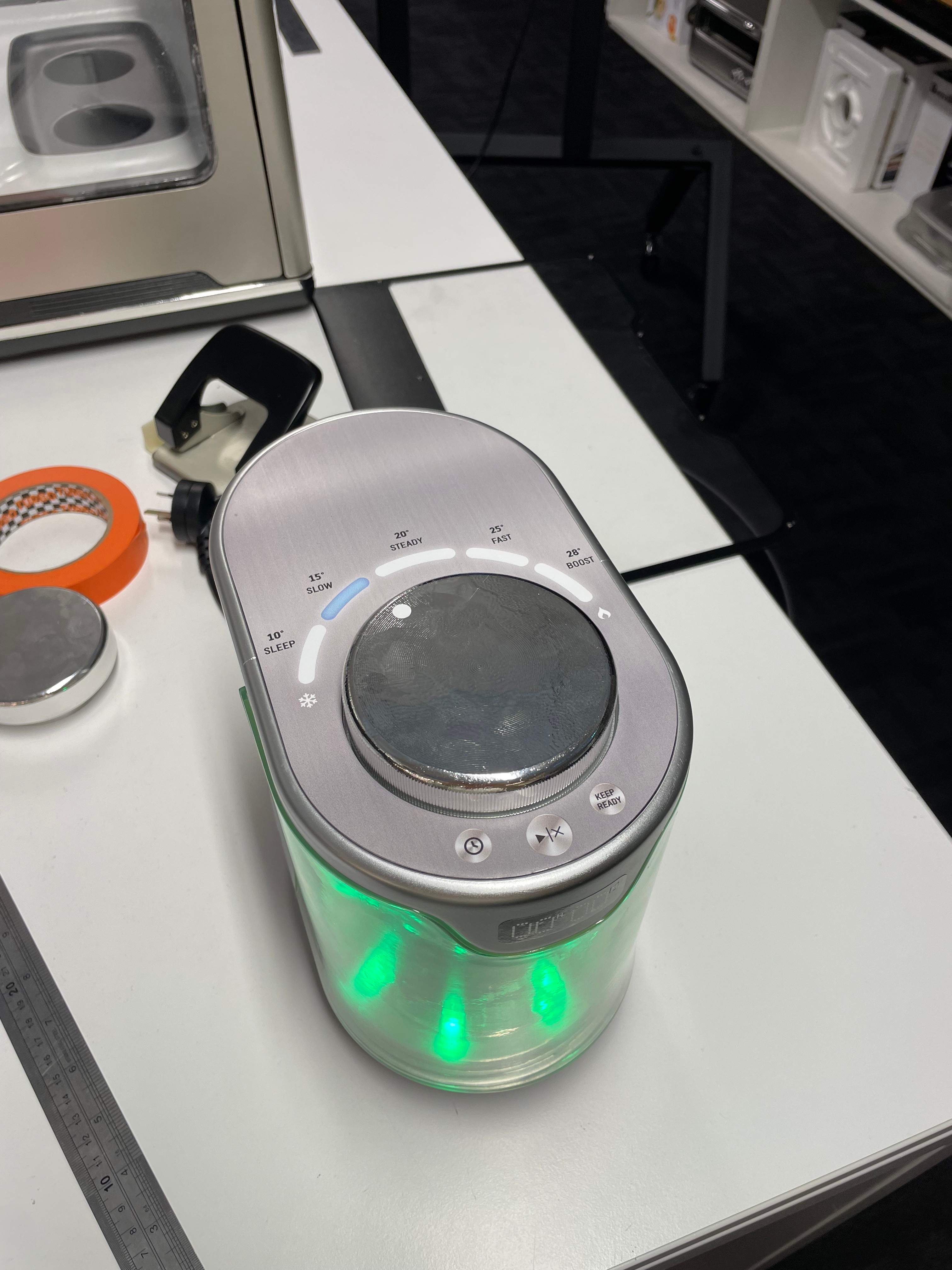
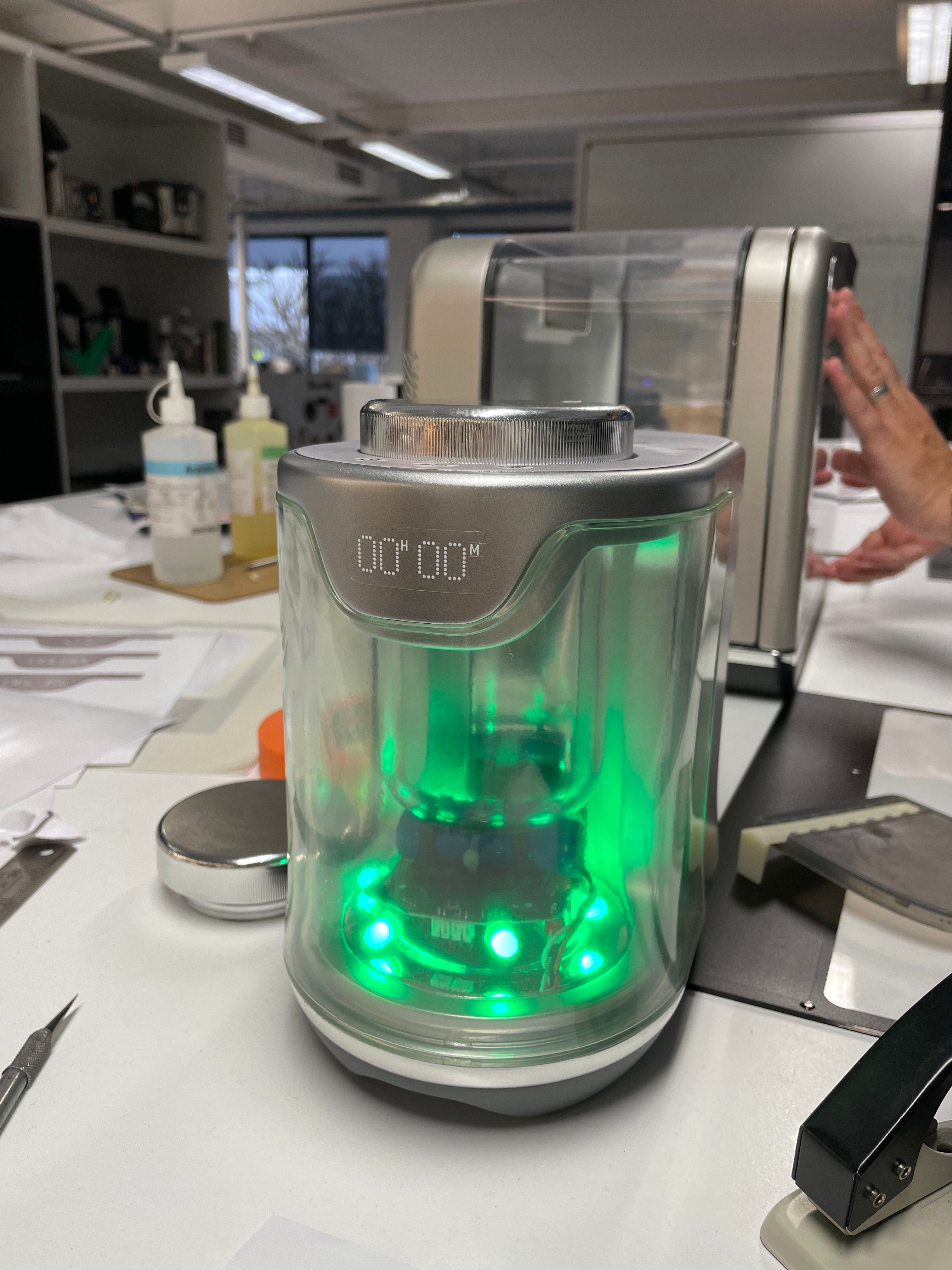
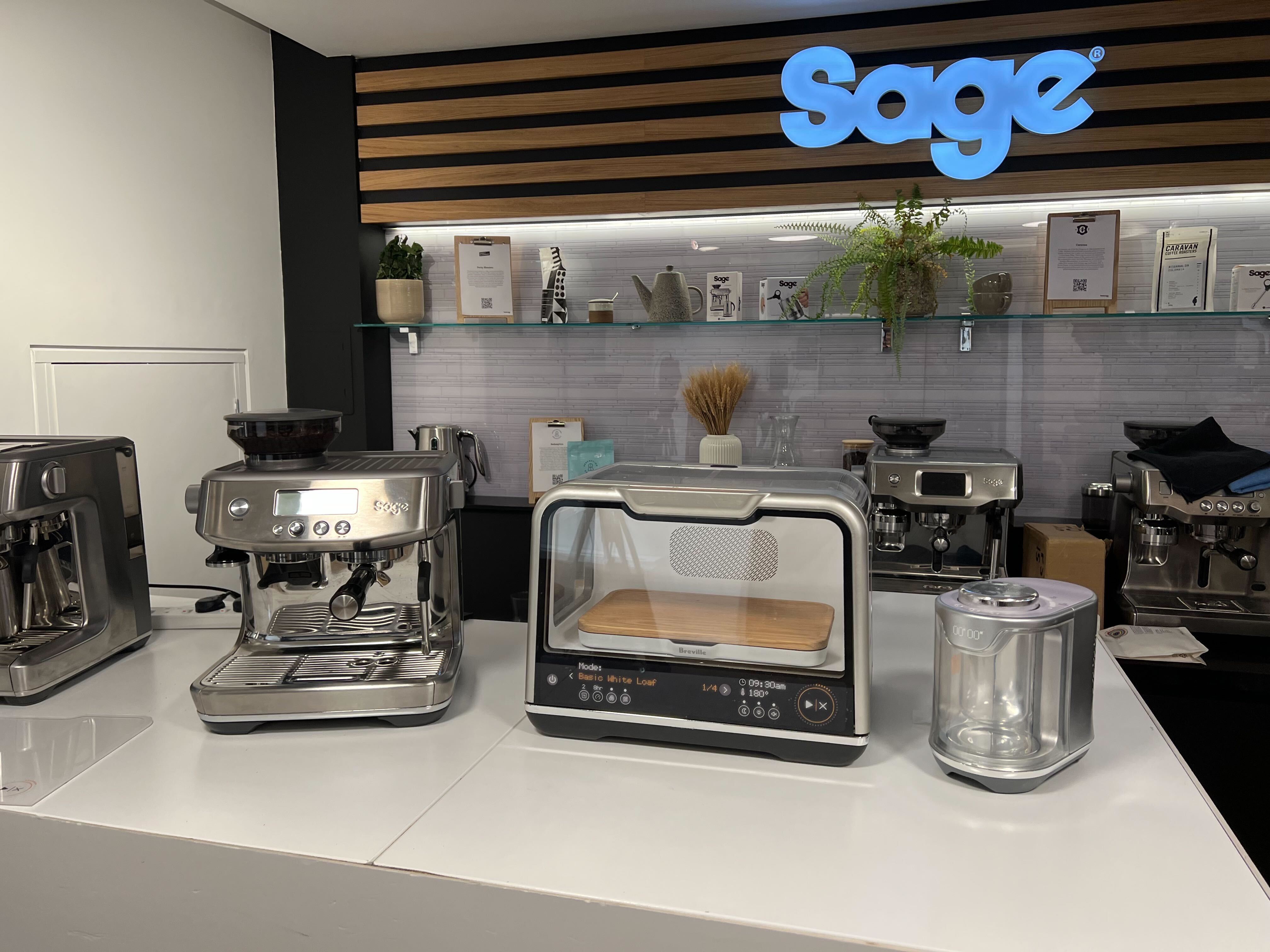
Startergotchi didn’t make its way to production due to certain costing, mechanical and supplier challenges, even though there was high consumer desirability, the viability for the business wasn’t high enough to continue development.
It highlights the multi-faceted challenges unique to a physical product development company, where specific hardware associated challenges arise which other digital-based products don’t often face.
Consumer desirability must always be balanced with technical feasibility and business viability.
However, the learnings from this project have been invaluable in the design and success of other Breville products.
Brands I’ve worked with: